Sitework guide • Dirt, utilities, stormwater, exclusions

The low bid may be missing dirt.

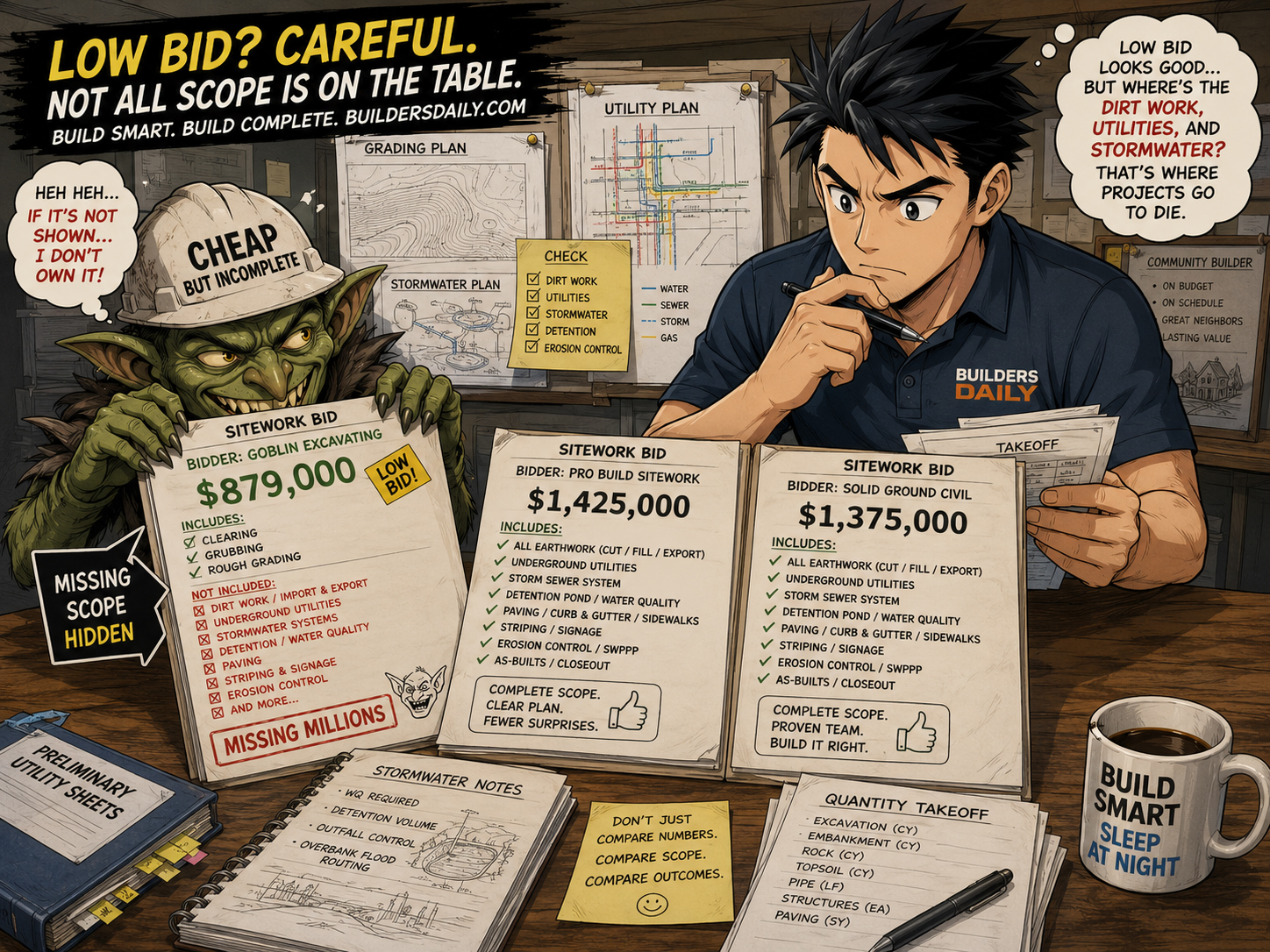
Three sitework bids sit on the table. The cheapest number looks heroic. Then Masaru sees the goblin hiding in the exclusions: dirt quantities, utility crossings, stormwater scope, erosion control, testing, trenching, and “by others.”

Three sitework bids on a table; the cheapest bid has a goblin hiding missing dirt, utilities, and stormwater scope
Bid day: the goblin hides in exclusions Read scope
Bid warning

Cheap is not the same as complete.

Trap 01

Exclusions are part of the price.

If a bid excludes erosion control, unsuitable soils, utility crossings, testing, traffic control, or stormwater scope, the number is not comparable to a complete bid.

Trap 02

Quantities can move the whole job.

Cut/fill, import/export, trench spoils, compaction, rock, unsuitable material, and hauling assumptions can change fast.

Trap 03

Stormwater is not optional mud.

Detention, inlets, erosion control, SWPPP maintenance, street tracking, and runoff management can become schedule and compliance risk.

Scope comparison

What the low bid might not include.

The cheapest bid may be real. Or it may be incomplete. Masaru checks the scope before celebrating.

Check

Earthwork

Cut/fill, import/export, hauling, rock, unsuitable soils, moisture conditioning, and compaction.

Check

Stormwater

Storm drains, inlets, basins, outfalls, erosion control, SWPPP support, maintenance, and cleanup.

Check

Utilities

Wet utilities, dry utilities, trenching, sleeves, crossings, laterals, service points, and utility coordination.

Check

Testing

Compaction tests, pressure tests, soils reports, special inspections, and agency-required documentation.

Check

Traffic and access

Construction entrances, street cleaning, traffic control, haul routes, staging, and public access protection.

Check

Exclusions

“By others,” allowances, unit prices, assumptions, alternates, and items deliberately left out.

Bid questions

Ask these before awarding sitework.

A good sitework comparison asks ugly questions while the numbers are still on paper.

Dirt

What quantities are assumed?

Ask about cut/fill balance, import/export, rock, unsuitable soils, hauling distance, shrink/swell, and moisture conditioning.

Stormwater

Who owns erosion control?

Ask who installs, inspects, maintains, repairs, documents, and removes erosion-control measures.

Utilities

What utility scope is included?

Ask about trenching, bedding, backfill, sleeves, crossings, laterals, testing, utility coordination, and dry-utility interfaces.

Schedule

What controls the start and finish?

Ask about mobilization, permits, inspections, weather, utility release, paving sequence, and phase turnover.

Risk

What becomes a change order?

Ask which field conditions, quantity changes, agency requirements, delays, or conflicts trigger added cost.

Compare

Are all bids pricing the same scope?

Normalize inclusions, exclusions, unit prices, allowances, alternates, and assumptions before ranking bids.
The lowest number is not always the lowest cost.

A low sitework bid can be a win if it is complete, clear, and executable. It becomes a trap when the missing scope returns later as change orders, delays, compliance problems, utility conflicts, or muddy surprises.

Monster warning

The low-bid goblin travels with friends.

Sitework traps usually wake more than one monster. Dirt, water, utilities, budget, and schedule all talk to each other.

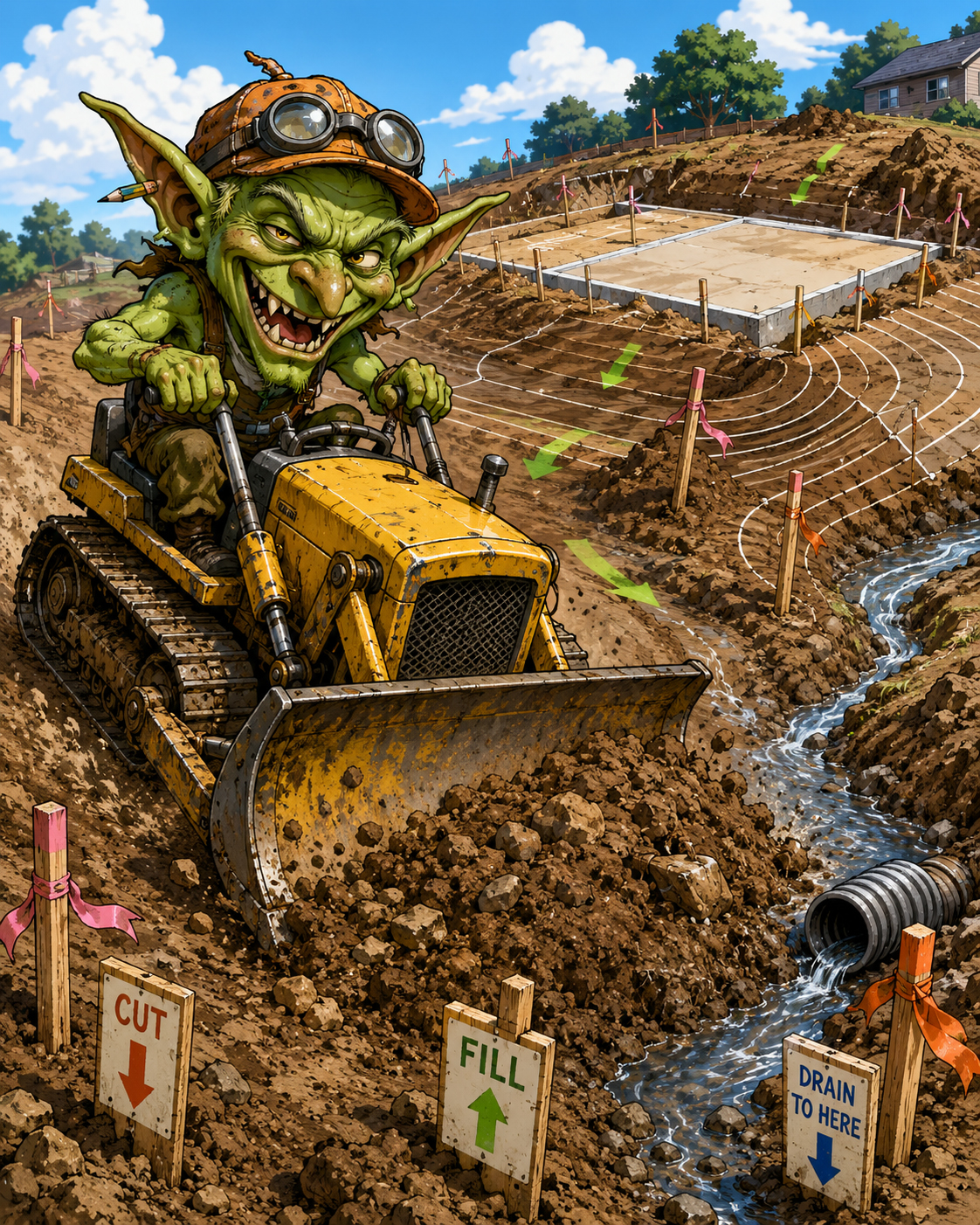
Grading Goblin

Appears when cut/fill, import/export, pads, slopes, and soil assumptions do not match field reality.

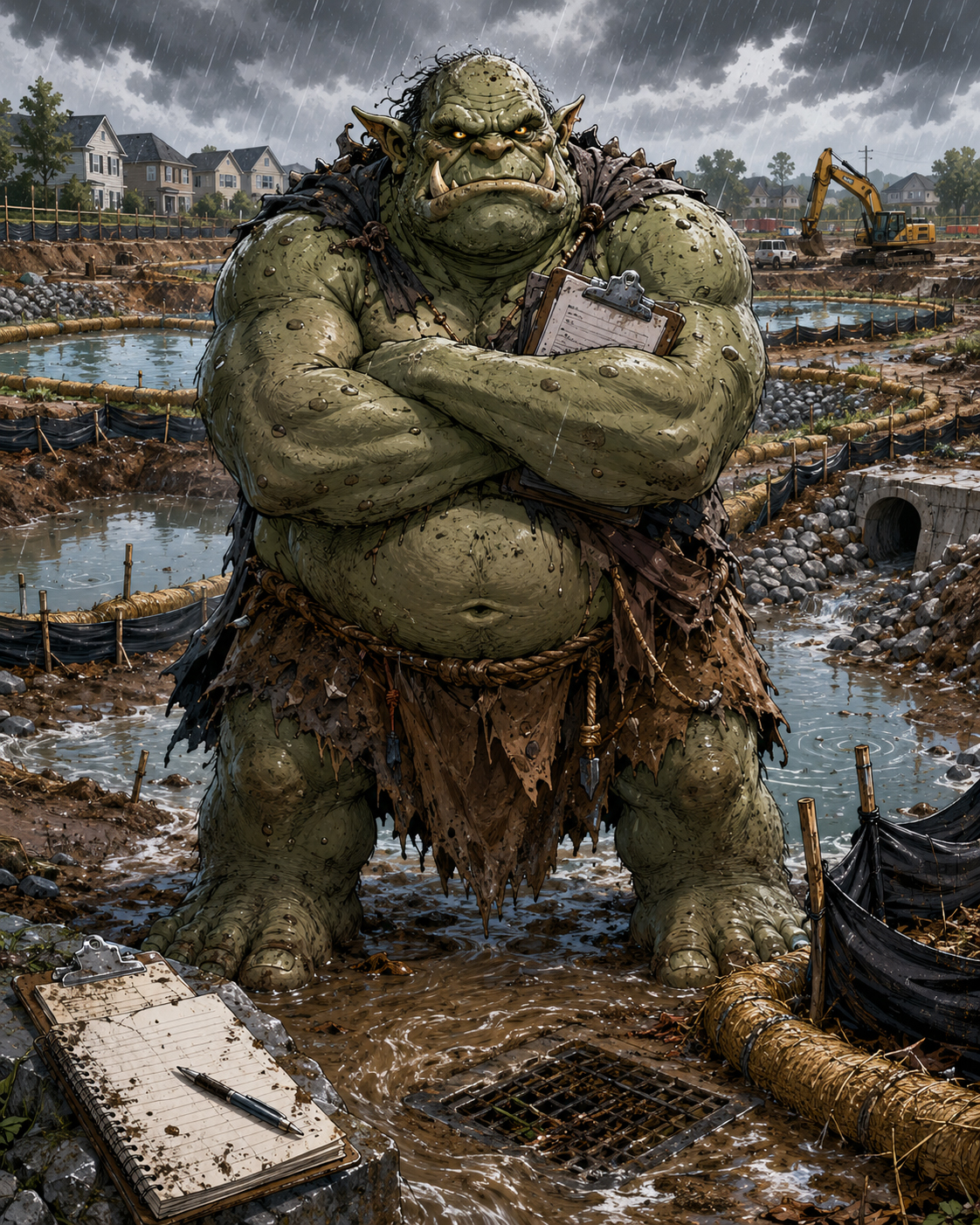
Stormwater Ogre

Appears when detention, erosion control, SWPPP logs, inlets, and runoff scope were treated as minor details.

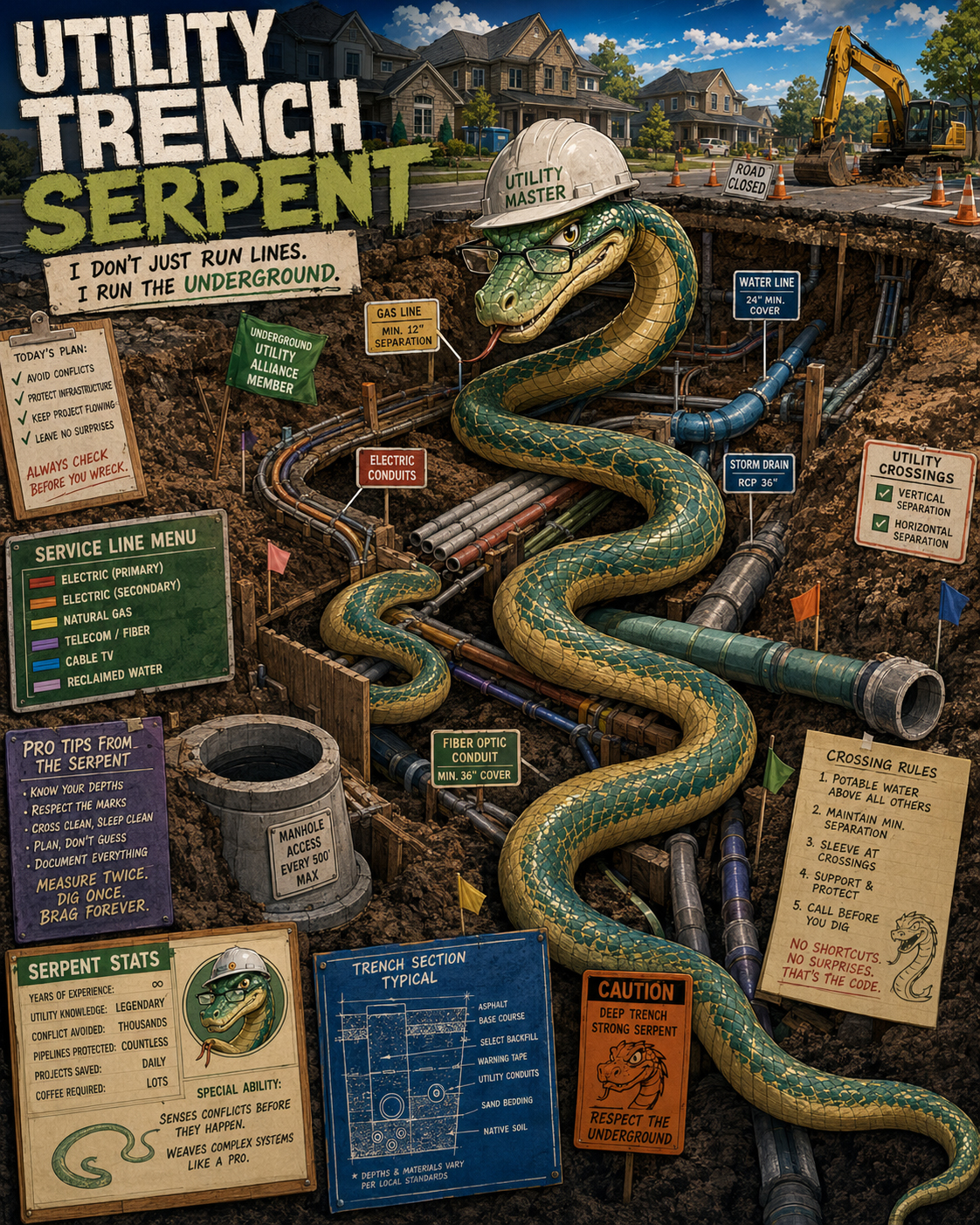
Utility Trench Serpent

Appears when utility crossings, sleeves, trenching, laterals, and coordination were not truly included or sequenced.

Important

Educational guide, not estimating, contracting, engineering, or legal advice.

BuildersDaily.com is educational manga comedy about community-builder concepts. This page is not estimating, legal, contract, civil engineering, stormwater, geotechnical, financial, safety, or project-specific construction advice. Always consult qualified professionals, approved plans, contracts, bids, permits, and authorities having jurisdiction.

Hard hat, site plan, ruler, and educational site disclaimer visual