Secrets the subdivision teaches the hard way.
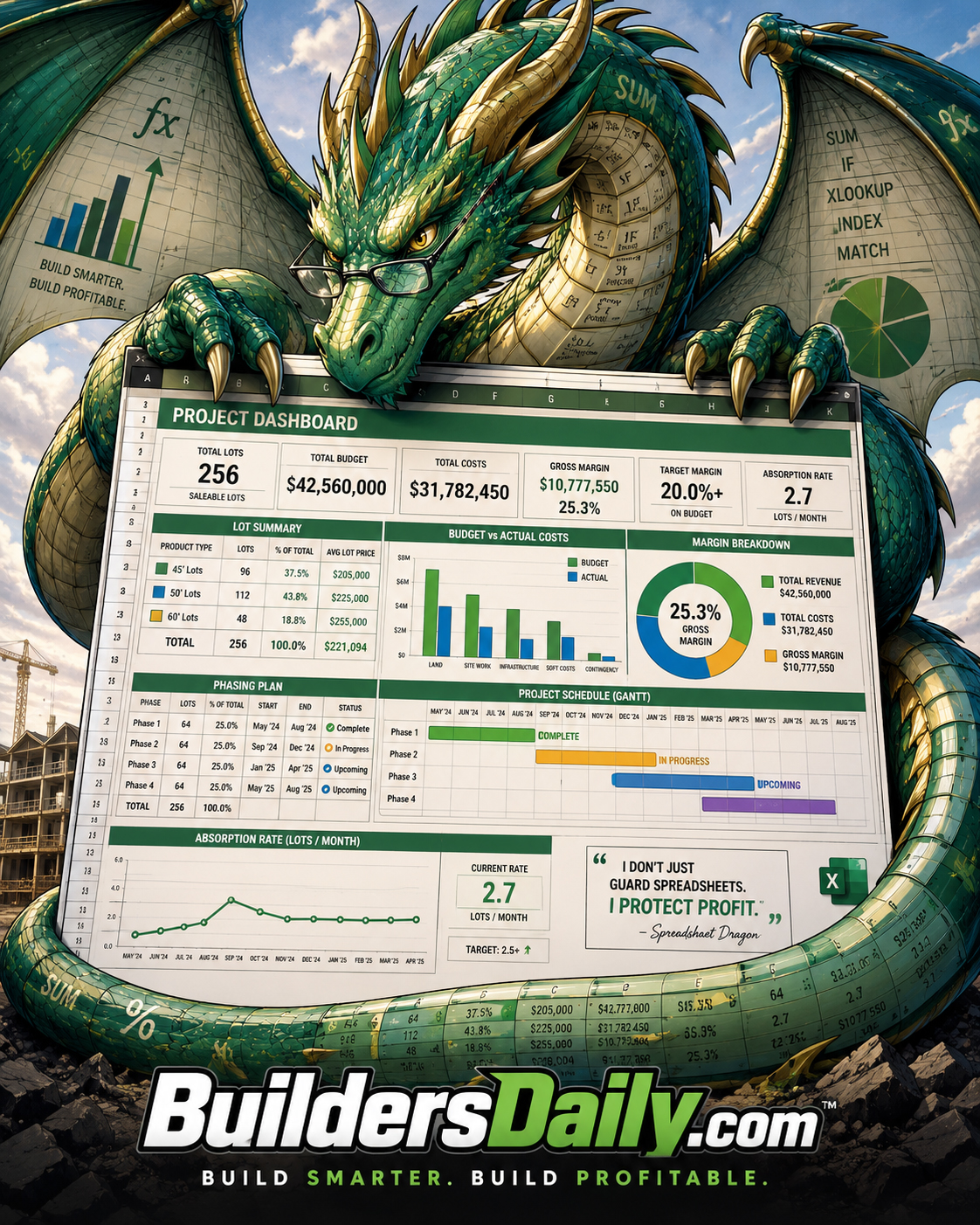
Community building is not one house repeated. It is land, entitlement, grading, utilities, streets, models, sales, starts, closings, warranty, and a thousand spreadsheet cells waiting to breathe fire.
Community building is not one house repeated. It is land, entitlement, grading, utilities, streets, models, sales, starts, closings, warranty, and a thousand spreadsheet cells waiting to breathe fire.
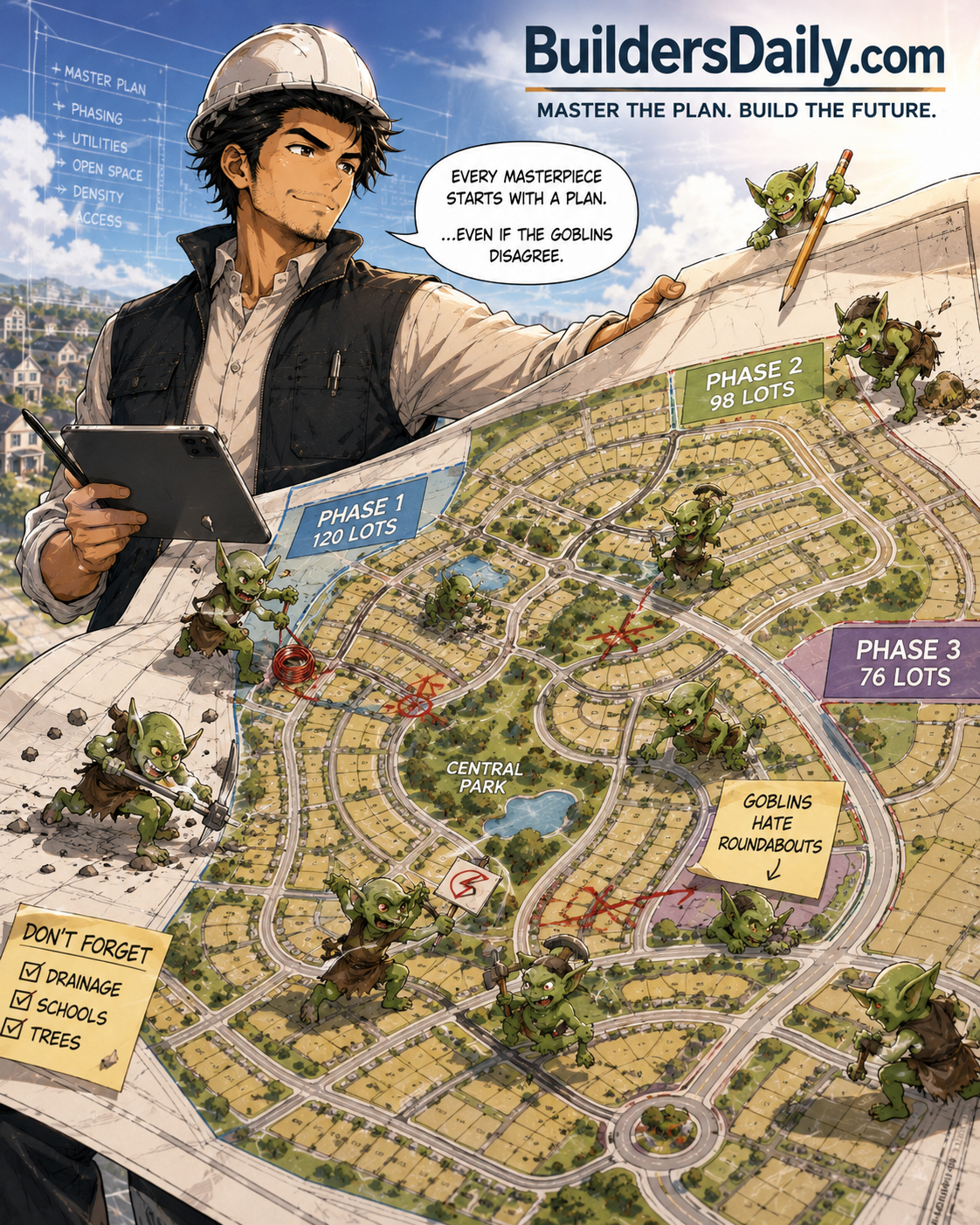
Phase order controls cash, labor, utilities, model timing, inspection flow, sales pace, closings, and buyer experience.
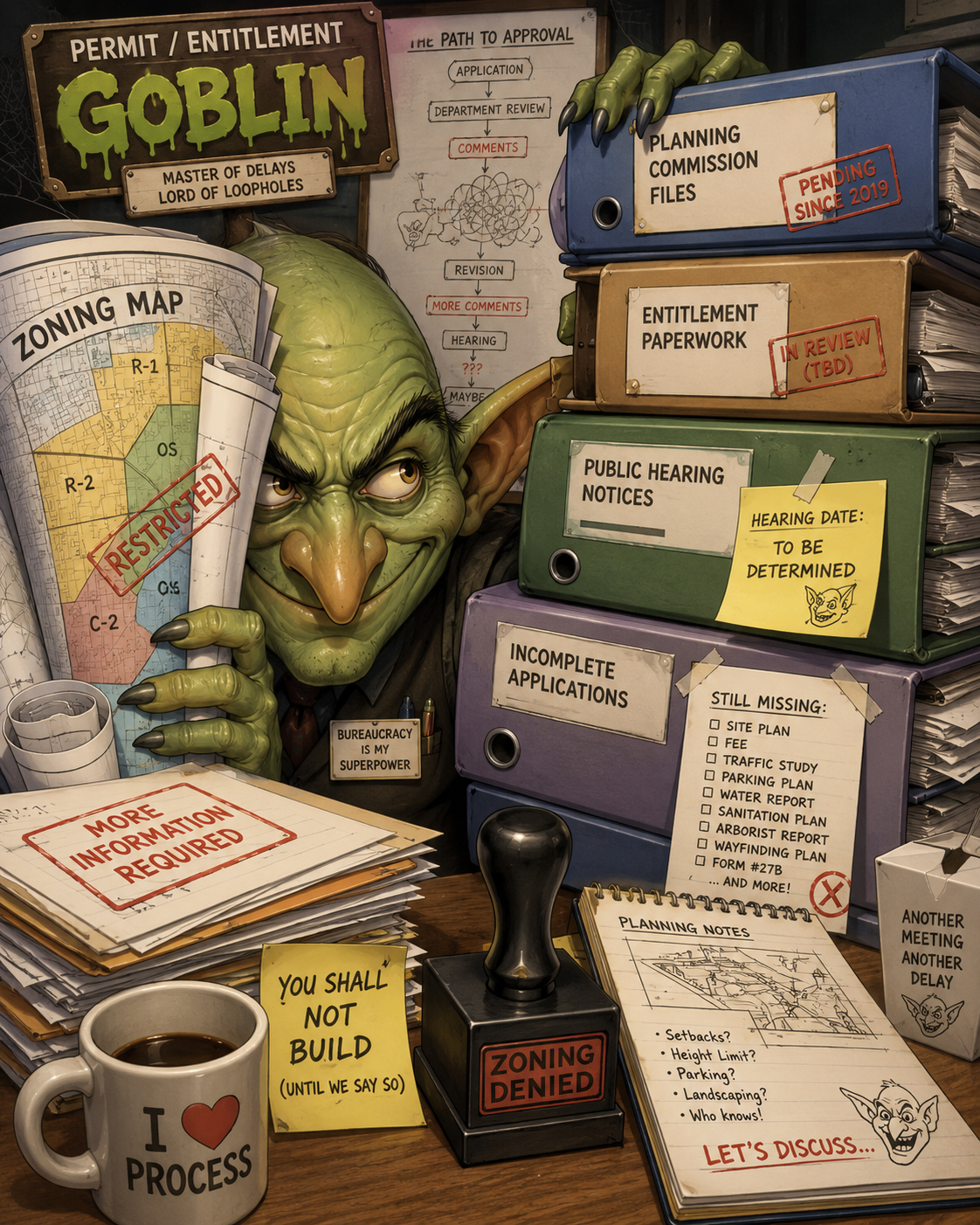
Zoning, comments, public hearings, conditions, resubmittals, and approvals can bend the whole pro forma.
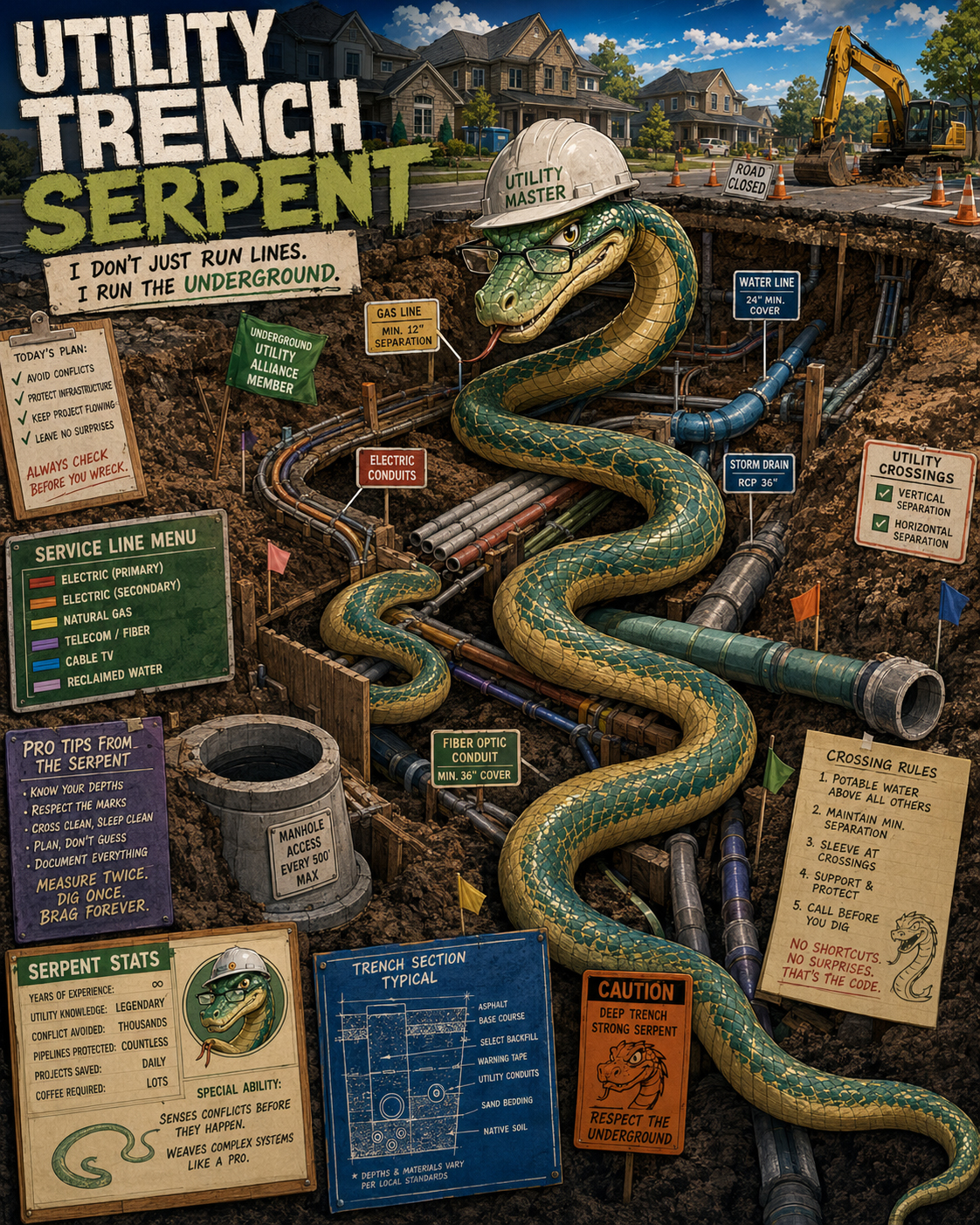
Water, sewer, storm, dry utilities, street crossings, trench conflicts, and sequencing decide whether pads can become homes.
Lot counts, starts, margins, absorption, incentives, options, and schedule assumptions must survive the field.
The Model Home Mirage creates desire and expectation; the builder must define what is included, optional, upgraded, or unavailable.
If buyers do not arrive at the modeled pace, starts, closings, cash flow, and inventory all begin arguing.
These are the places the monsters like to hide before the first model-home ribbon cutting.
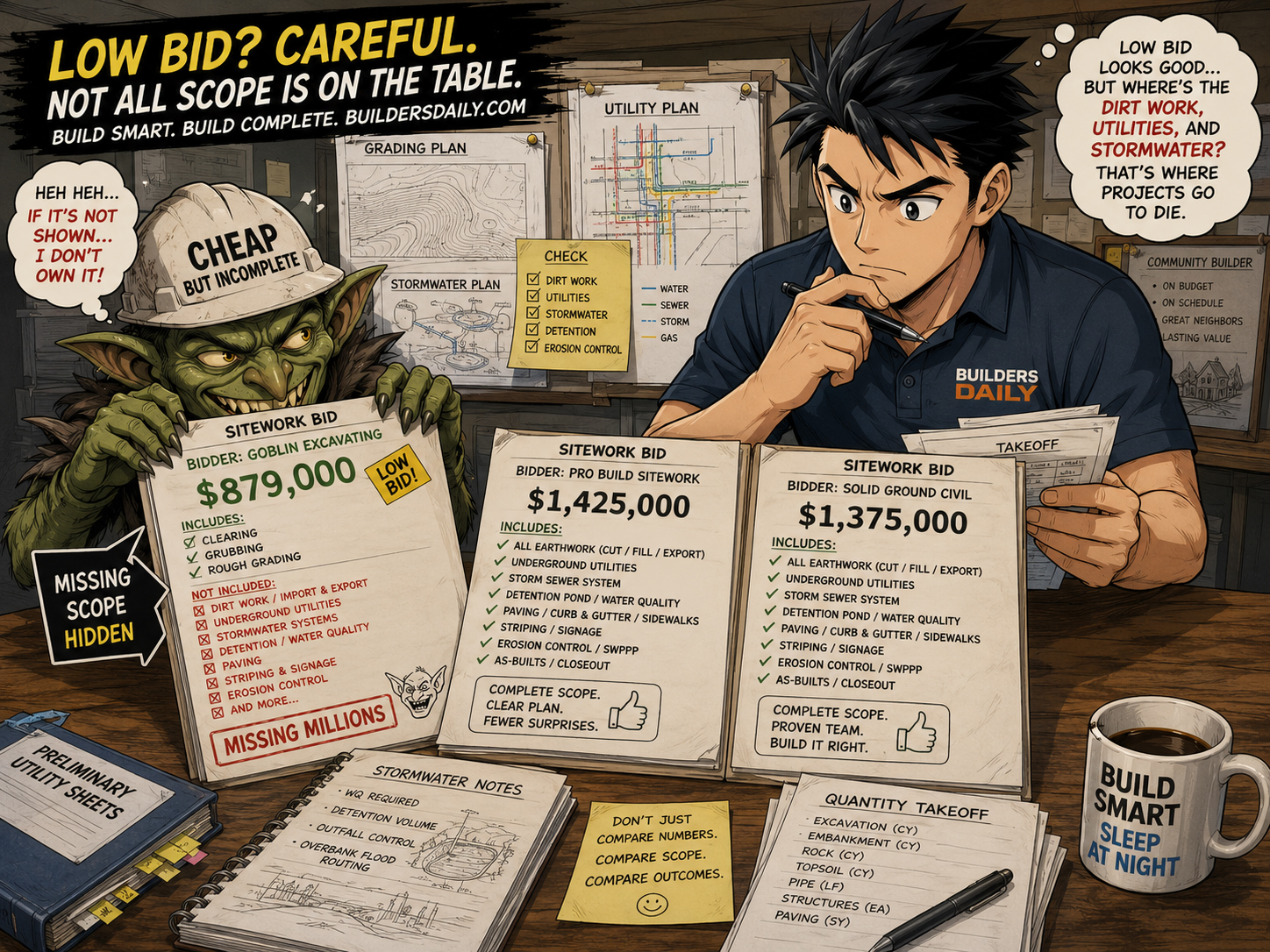
Compare grading, stormwater, utilities, crossings, import/export, erosion control, and exclusions before celebrating the number.
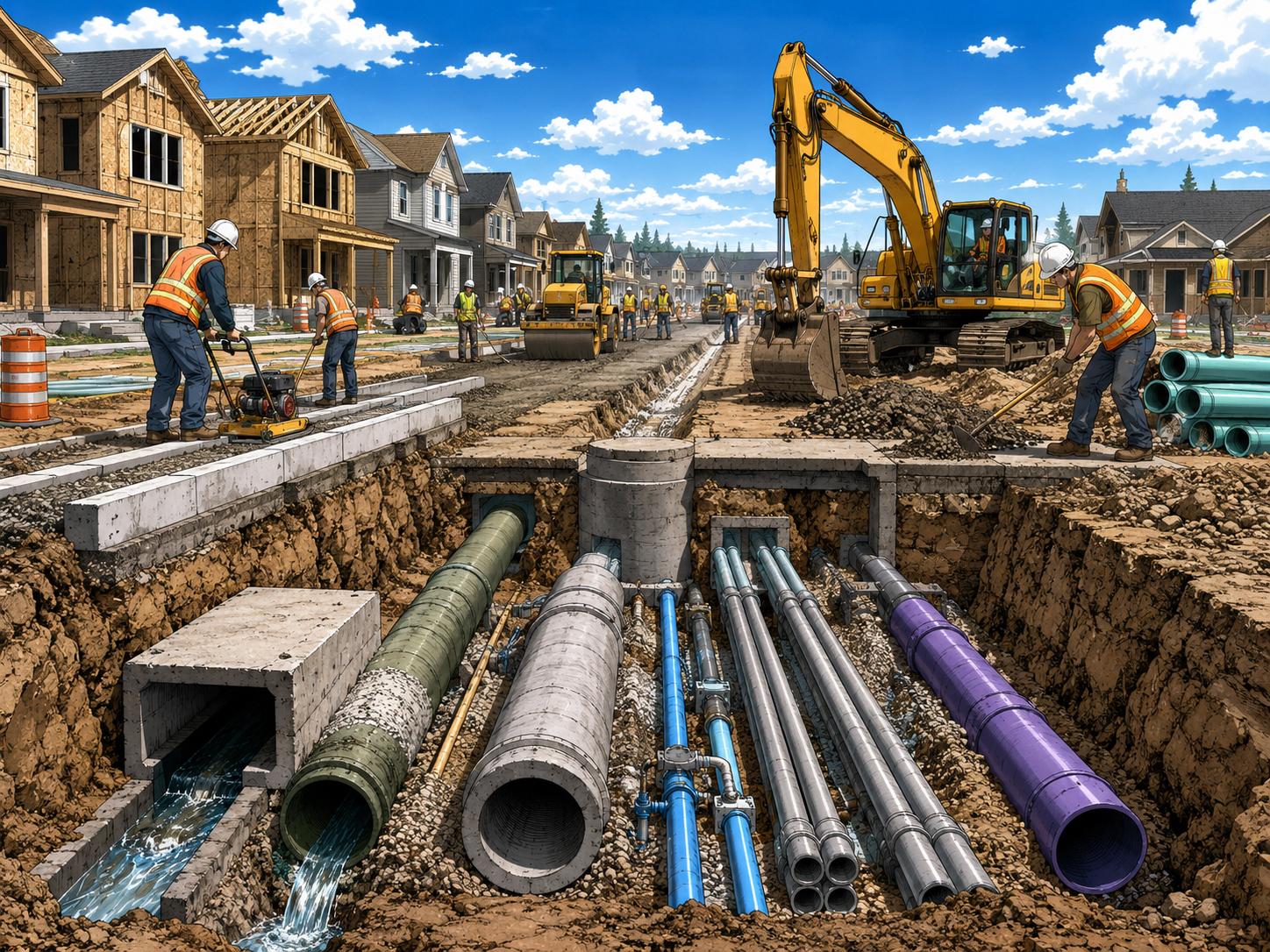
Trench conflicts, utility timing, street crossings, dry utility coordination, and inspection windows can control the whole phase.

Model homes, options, design center choices, and buyer assumptions must be managed before expectations become disputes.
BuildersDaily turns community-development pain into characters so the lesson sticks: paperwork, trenches, spreadsheets, model-home fantasy, and market timing.
Not inspirational quotes. Survival rules for the map, the field, the trailer, and the pro forma.
Marketing renderings sell the dream. The buildable map survives easements, utilities, drainage, grades, and approvals.
Streets, utilities, stormwater, and access must support the homebuilding machine before the machine accelerates.
Define standards, options, upgrades, premiums, and buyer decision deadlines before the mirage sells confusion.
The market sets the rhythm. Traffic, rates, pricing, competition, incentives, and buyer confidence all vote.
A production builder is not just managing homes. Masaru is managing a machine: entitlement, sitework, utilities, lots, starts, trades, inspections, sales, options, closings, warranty, and the story buyers believe when they enter the model.
BuildersDaily.com is educational manga comedy about community-builder concepts. It is not legal, engineering, architectural, planning, entitlement, code, market forecasting, financial, or project-specific construction advice. Always consult qualified professionals and authorities having jurisdiction.