Safety guide • PPE, fencing, deliveries, streets, public separation

A community jobsite is not a quiet neighborhood yet.

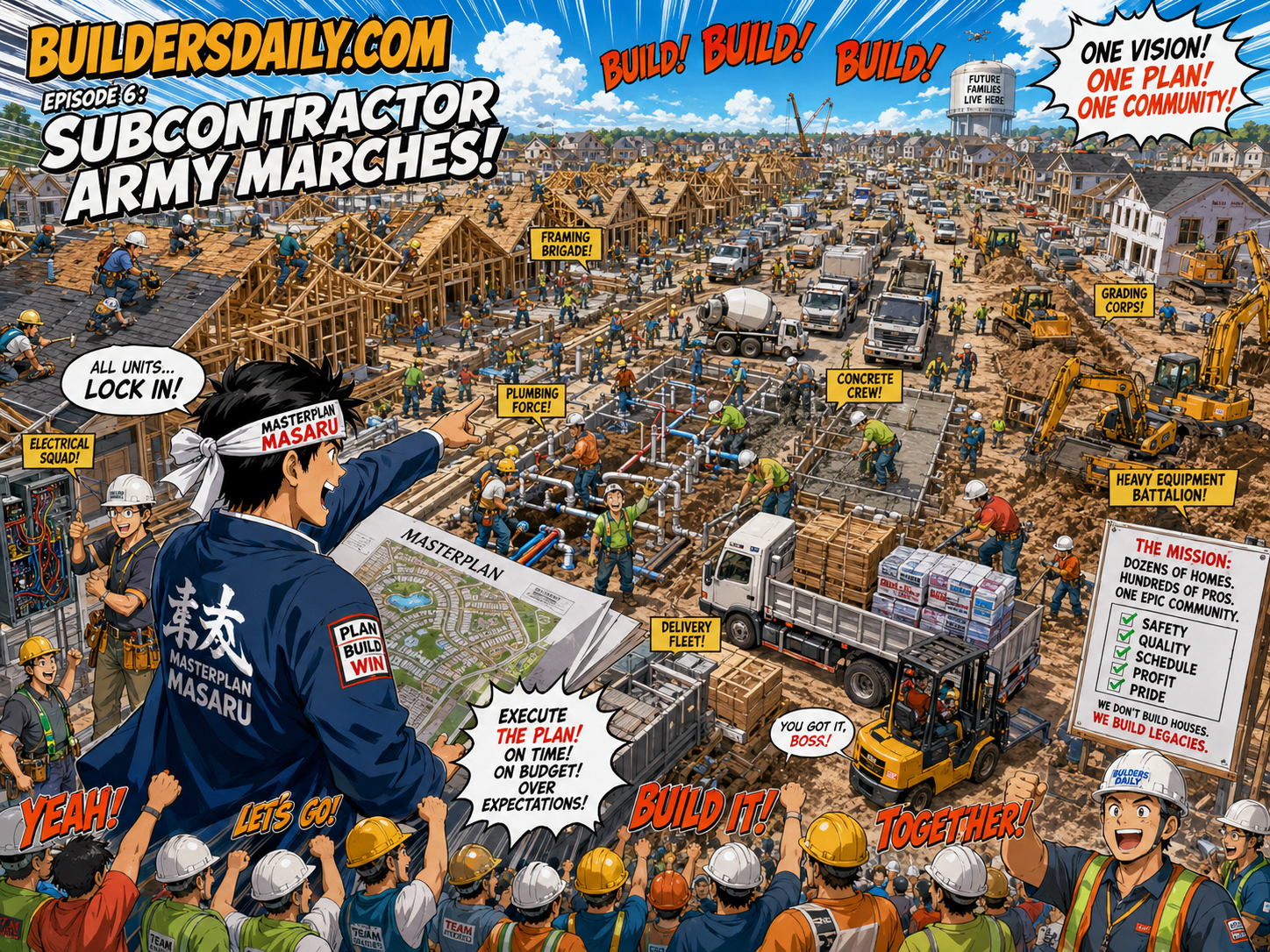
A production-home community can have buyers touring models, residents moving in, deliveries arriving, crews framing homes, utilities open, equipment moving, and inspectors crossing the site. Masaru knows speed only works when safety, access, and public separation are treated as part of production.

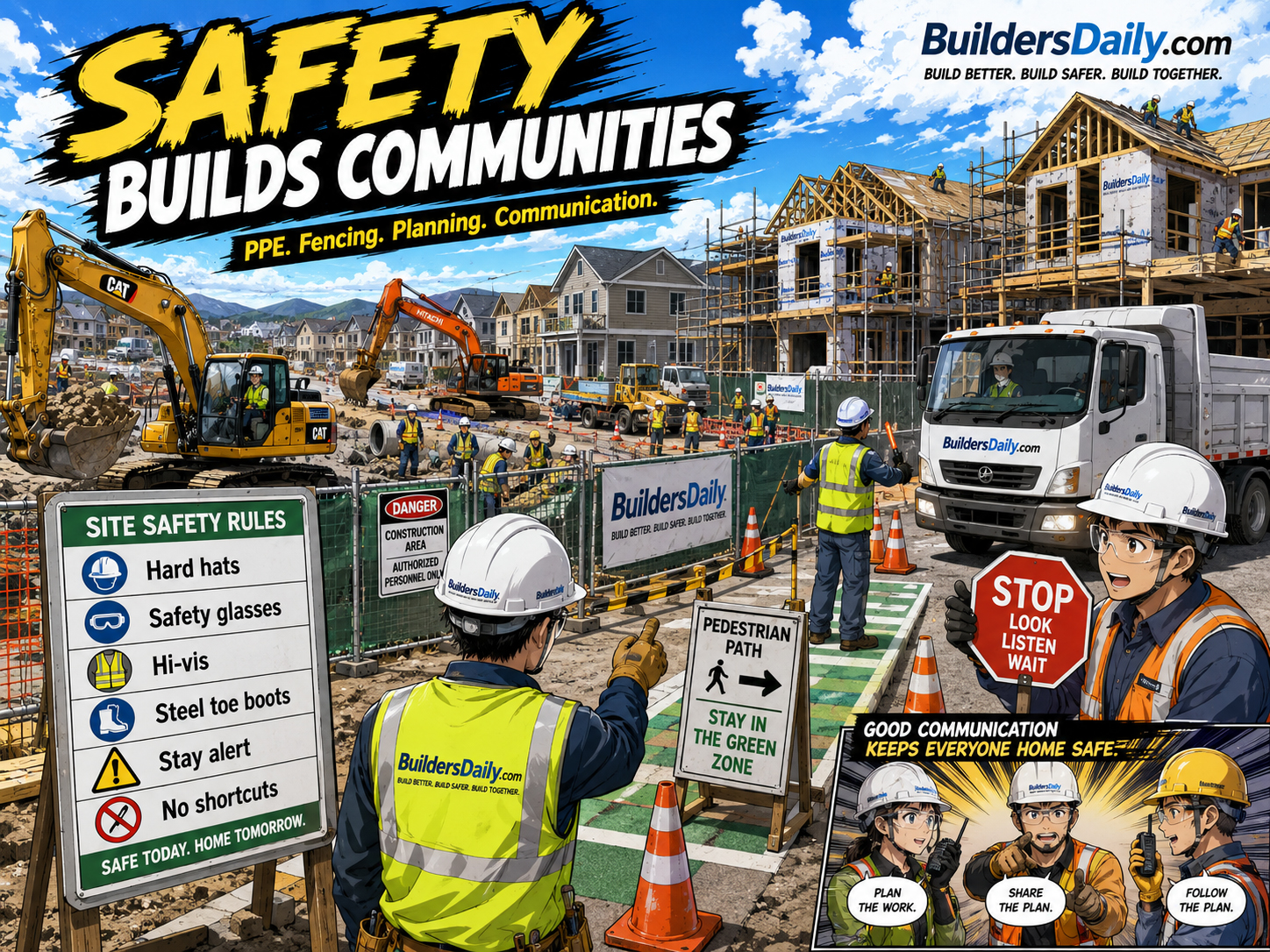
Large production-home jobsite safety scene with PPE, fencing, equipment, streets, signage, and crews
Public streets are not the same as construction streets Separate and control
Safety truth

The community becomes safer when the route is clear.

Truth 01

Production sites have overlapping traffic.

Subcontractors, inspectors, suppliers, heavy equipment, sales guests, homeowners, and delivery drivers can all be near the same streets if the site is not controlled.

Truth 02

Safety is a production system.

PPE, fencing, signage, routes, delivery staging, housekeeping, access, and supervision are not extras. They keep the machine moving without turning into chaos.

Truth 03

Public separation matters more as homes close.

Once buyers move in, the jobsite has to protect residents, guests, children, pets, workers, and crews still finishing later phases.

Safety zones

What must be controlled on a community jobsite.

This is educational only, not a safety program. Real jobs need qualified safety professionals and project-specific plans.

Zone

PPE

Hard hats, eye protection, vests, boots, gloves, fall protection, and task-specific requirements.

Zone

Fencing

Public separation, restricted areas, open excavations, equipment zones, and protected access routes.

Zone

Streets

Construction traffic, public access, parking, road closures, deliveries, haul routes, and signage.

Zone

Equipment

Heavy machinery, backup zones, operators, spotters, deliveries, cranes, forklifts, and staging.

Zone

Housekeeping

Debris, nails, trash, cords, materials, trip hazards, dumpsters, and daily cleanup.

Zone

Residents and buyers

Model tours, sales parking, homeowner access, occupied lots, children, pets, and public routes.
Masaru’s questions

Daily questions that keep the site from becoming a maze.

On a large community site, a simple question asked early can prevent a complicated problem later.

Access

Who is allowed where today?

Separate active construction, model-home visitors, homeowners, inspectors, deliveries, and public access routes.

Deliveries

Where will trucks stage?

Plan lumber drops, roof loads, concrete trucks, cabinets, appliances, dumpsters, and street access before trucks arrive.

Open work

What hazards are exposed?

Look for excavations, trenches, framing edges, ladders, roof work, open utilities, uneven surfaces, and unfinished sidewalks.

Signage

Can a visitor understand the site?

Use clear signage, barriers, parking directions, model-home routes, and construction-only warnings.

Cleanup

Is housekeeping keeping up?

Trash, nails, scrap, mud, cords, loose material, and poor storage become bigger risks as the community fills.

Overlap

What changed since yesterday?

New residents, new streets, new deliveries, new trenches, new inspections, and new public routes can change the safety picture.

Safety is part of the schedule.

A production site can only move quickly when work areas, public routes, delivery zones, active equipment, PPE, housekeeping, signage, and supervision are coordinated. Speed without control creates risk and slows the whole community.

Traffic and deliveries

Most chaos arrives on wheels.

Trucks, equipment, workers, inspectors, buyers, and homeowners all move through the same community unless the builder creates clear routes.

Are construction and buyer routes separated?

Model-home traffic should not wander through active framing, utility trenches, or delivery staging.

Are deliveries sequenced?

Roof loads, lumber, concrete, cabinets, appliances, dumpsters, and equipment need staging space and timing.

Are occupied homes protected?

As residents move in, dust, noise, access, parking, temporary closures, and construction routes need special attention.

Important

Educational guide, not safety training or OSHA/legal advice.

BuildersDaily.com is educational manga comedy about community-builder concepts. This page is not safety training, OSHA guidance, legal advice, engineering advice, site-specific safety planning, or a substitute for qualified safety professionals. Always consult licensed/qualified professionals, approved safety plans, applicable regulations, contracts, permits, and authorities having jurisdiction.

Hard hat, site plan, ruler, and educational site disclaimer visual